Who's Who: Special Feature
Special Feature for the 50 Anniversary of the Fall of Saigon
 It’s important to humanize the face of not only the Vietnam War but all wars so we can bear witness to the horror, suffering, destructiveness, and displacement that accompany them... I truly believe that at the end of the day, it is our humanity, our activism, and our basic acts of kindness toward one another that can be the most powerful medicine to heal our deepest wounds and to make our world a better place.
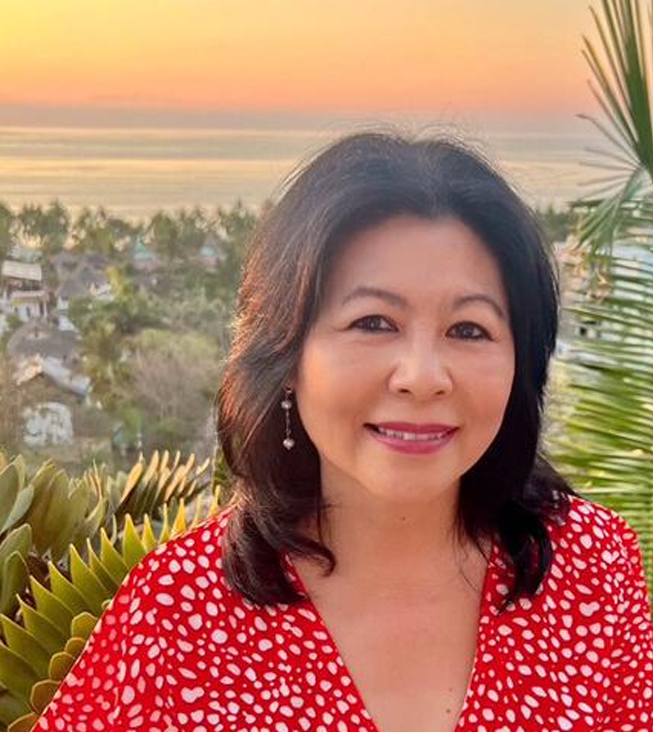
Meet Dr. Carolee GiaoUyen Tran
Assistant Clinical Professor
University of California Davis Medical School
Department of Psychiatry and Behavioral Sciences
Degrees and institutions:
PhD – Boston University
Predoctoral internship – Harvard Medical School at Massachusetts Mental Health Center
Areas of expertise/interests:
Refugee mental health; trauma (survivors of abuse and war); diversity, equity, and inclusion; and mindfulnessbased techniques.
Self-care activities:
Meditation, exercise, spending time with family and friends, and traveling.
What led you to this field and/or career path?
During my junior year at UC Berkeley, I worked as a paraprofessional with Southeast Asian refugee youths and their families. This experience was so profoundly meaningful and rewarding that it inspired me to major in psychology and pursue my Ph.D. in clinical psychology.
My experiences as a Vietnamese refugee and a survivor of sexual abuse influenced my decision to specialize in trauma therapy. I believe that people are generally capable, resilient, and have a desire to move towards growth and healing. These assumptions make me optimistic about people’s capacity to heal from traumas, if they’re able to access help and get support. These beliefs enable me to remain hopeful, steady, and tenacious in my work with clients. I’m passionate about helping and empowering survivors of various traumas to heal, speak their truths, and live deeply meaningful and authentic lives.
What have been the biggest changes in your field since you have started?
When I received my PhD in clinical psychology, I was the first Vietnamese American woman to obtain the degree. Now we have many others, which is incredibly exciting! In our diverse country, it’s important to have more psychologists of color to reflect the rich tapestry of our society.
How do you keep your life in balance?
I begin and end each day with prayer and meditation. I also enjoy spending time with family and friends, exercise five days a week, travel, attend Buddhist retreats, and engage in volunteer activities that promote equality, social justice, and inclusion. I also try to remember that there are limits to what I can accomplish as an individual. I’m a big believer in selfcare and have learned that when I take care of myself, everyone around me benefits, and everything in my work and personal life flows better. To me, self-care is not selfishness but is a necessity. When we take care of ourselves, everyone we touch benefits from our positivity and equanimity.
What have you observed about how trauma gets passed down through generations of Vietnamese families?
Intergenerational trauma is a significant issue for the Vietnamese community. In my work, I’ve observed that many Vietnamese refugees experience significant traumas from their exposure to the war, their escape out of Vietnam, and the racism they face as they build a new life in America. Research has shown that these types of traumas can affect genetic processes, leading to traumatic reactivity, depression, anxiety, and PTSD in the survivor as well as their children and grandchildren. My clients who are offsprings of Vietnamese refugees frequently discuss how their parents’ refugee experiences have negatively impacted their mental health, even if their parents rarely talk about the details of their traumas.
Additionally, since 2016, we’ve seen a resurgence in racist rhetoric and hateful actions targeting Asian Americans, as well as deportations and ICE raids in various Southeast Asian communities. These events have intensified the traumatization of the Vietnamese community.
What does it mean to tell stories that challenge how the Vietnam War is remembered/commemorated by mainstream America?
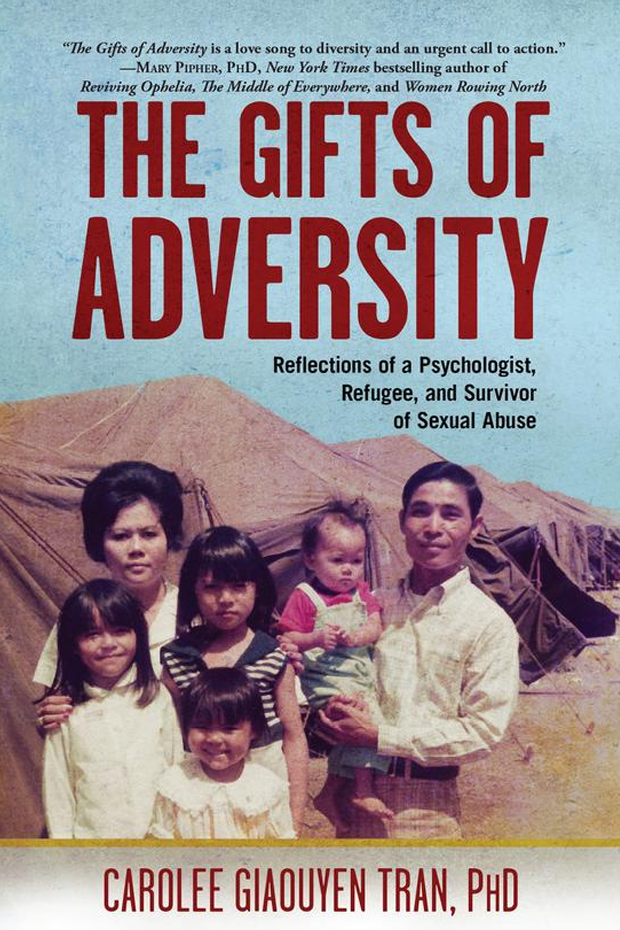
I wrote my book The Gifts of Adversity to combat the depersonalization, intellectualization, and sanitization of war.
It’s important to humanize the face of not only the Vietnam War but all wars so we can bear witness to the horror, suffering, destructiveness, and displacement that accompany them. I also wanted to highlight the courage and resilience of survivors of war so we can empathize with their plight. It’s my hope that my book can inspire all of us to be kinder and more compassionate to refugees, trauma survivors, and one another. I truly believe that at the end of the day, it is our humanity, our activism, and our basic acts of kindness toward one another that can be the most powerful medicine to heal our deepest wounds and to make our world a better place.
For more information, see Dr. Tran’s website: https://caroleetran.com/