

2027 Division 56 Officer Positions for Election:
- President-Elect (One-year term, moves into the President's office for the succeeding term)
- Member-At-Large (Three-year term, renewable for one term)
The Division 56 Bylaws govern office positions and terms.
Each nominee has been asked the following questions
You can read their answers below by clicking each nominee's name
- What are some priorities you would pursue to further promote anti-racism, diversity, equity, and inclusion within our division and our field?
- Given the current socio-political landscape, what do you see as the key challenges in promoting anti-racism, diversity, equity, and inclusion in our field and what are some ideas for how the division can tackle these challenges?
- What are some skills and interests that you bring that might align with the I-DARE strategic plan and goals?

Statement:
As a current Member-at-Large on the division's Executive Committee, I have served as a member of the division's I-DARE committee, as well as a member of the finance committee. Prior to serving in leadership in the division, I was elected to the APA Council of Representatives. During my two-term tenure on Council, I was elected to the Council Leadership Team. As a result, I have developed deep knowledge regarding the association's policy-making process as it relates to policies about the field of psychology, as well as those that pertain to the organization's internal structure.
My vision for trauma psychology includes a more complete consideration of psychological trauma in both assessment and treatment interventions. Specifically, I believe our division can contribute to the development of trauma-competent approaches to forensic assessment, as well as continuing to enhance and promote treatment approaches that address complex trauma and dissociation in individuals who have been profoundly wounded by early childhood abuse and neglect.
Over the past two years, division leaders have worked hard to formalize and strengthen the governance of the division, including by involving a more diverse membership in leadership positions, as well as updating our bylaws. I would support continued progress in this direction, by continuing to ensure transparent, equitable, and wise use of our resources. I am also interested in efforts to increase the involvement of early career psychologists and students, such as by creating opportunities for mentorship and leadership engagement, particularly for individuals who are BIPOC and/or members of minoritized groups.
What are some priorities you would pursue to further promote anti-racism, diversity, equity, and inclusion within our division and our field?
"Much of the work I have been doing in recent years involves evaluating individuals forensically who have been harmed by discrimination and sexual abuse at work and at school. Many of these individuals are members of minoritized groups (e.g., LGBTQ+, Black, Latine, disabled). I have noticed that many forensic evaluators do not approach civil and criminal cases with a strong knowledge about the impact of traumatic events on those they evaluate, particularly more complex traumas, such as racism, discrimination, and betrayal traumas (e.g., sexual abuse & harassment by community members, racism/discrimination in the workplace). I would like to see the division take the lead in bringing the skills of our members in trauma assessment more fully into the forensic arena. Our division could seek to partner with Division 41 (American Psychology-Psychology of Law) around programmatic offerings at convention that speak to the assessment of these traumatic events (including racial trauma) in forensic contexts.
Additionally, I conduct assessments of individuals who were not born and/or educated in the U.S. Thus, they are often not reflected in the norms of common test batteries. The division has provided excellent webinars on working with trauma in BIPOC individuals in the past few years. I would like to continue this tradition by supporting more trainings that highlight the unique considerations of assessing individuals whose identities and/or traumatic experiences are not captured by the standard assessment tools available to us."
Given the current socio-political landscape, what do you see as the key challenges in promoting anti-racism, diversity, equity, and inclusion in our field and what are some ideas for how the division can tackle these challenges?
"We are faced with an increasingly violent national landscape, marked by aggression by the U.S. federal government against many individuals from traditionally marginalized groups (e.g., immigrants, refugees, people of color), as well as those who defend them. The murders of U.S. citizens who protested ICE actions in Minneapolis dominated media coverage earlier this year; less attention was paid to the traumatic impact of these events on communities and individuals who have been witnessing and experiencing ICE’s aggressive tactics on a daily basis. Our division has deep expertise on disaster response, emphasizing the need to center our work on the needs of the local communities. If elected, I would continue to emphasize efforts that support the leadership of local communities and organizations as they respond to and heal from such tragedies."
What are some skills and interests that you bring that might align with the I-DARE strategic plan and goals?
"As member-at-large on the Executive Board of Division 56, I was a member of the I-DARE committee. In that role, I proposed allocating funds from the division to supporting additional grant money to support trauma researchers whose project funding had been eliminated during the current administration, due to their projects' focus on marginalized populations. I continue to believe that the division can use its financial resources to fund trauma research that centers the needs of marginalized communities, whether by increasing the amount of money and/or number of grants provided to the division's CHANGE grants, or by finding avenues to support APF's new focus on direct care/service delivery grants (i.e., "Direct Action" grants) in less advantaged communities.
I also believe that undoing all forms of discrimination starts with acknowledging unfair and/or non-transparent procedures within the leadership of the division. While on the division's Executive Board, I have pointed out times when I felt that policies and/or rules were not applied equitably or fairly across committees. To that end, I will support clear articulation and application of policies in a transparent and equitable manner within the division's operations, so that we ensure that we amplify diverse voices and consider the ways in which power and privilege may be enacted within the leadership."
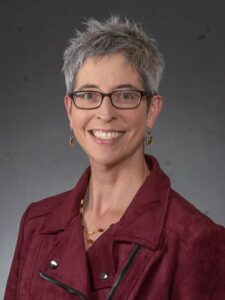
Statement:
I am running for Division 56 President-Elect because of my passion for making trauma psychology public. I have dedicated my career to making trauma psychology visible, accessible, and actionable. As a clinical psychologist and Distinguished University Professor at the University of Denver, I bridge research, practice, and policy through community-engaged research that I share with public audiences. As a university leader, I champion collaborations for public impact - from interdisciplinary health initiatives to community-university partnerships, in roles ranging from Department Chair to Associate Vice Provost for Public Good Strategy & Research. In professional service, I have prioritized education initiatives, from serving as the Division's inaugural Education and Training Committee Chair to co-editing the 10-volume Concise Guides for Trauma Care APA Book Series.
Division 56 does vital work connecting researchers, practitioners, and students to advance trauma science and practice. As President, I would work to build on this strong foundation to expand our collective capacity to bring trauma-informed insight to the urgent issues of our time. I would foster partnerships and initiatives that build relationships, skills, and resources for members to translate our work as trauma psychologists for public impact. Together, we can increase our Division's influence on critical national conversations, whether through op-eds, policy briefs, or other creative communications.
Division 56 members have an essential role to play in helping the public understand and respond to the traumas unfolding around us. I would be honored to work with you as President to realize our next chapter of impact together.
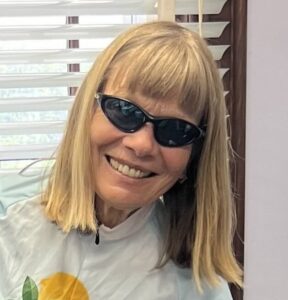
Statement:
I am someone who is passionate about APA Division 56 and advancing the field of trauma psychology. I would like to nominate myself for the Executive Board. Many of my life experiences, my professional credentials, my research interests, and my publications are about trauma psychology.
I got off to a rough start in life because my father had PTSD from World War II, and at a young age I witnessed his violence towards my mother. For years I had nightmares; they vanished in my twenties when I first became a very fast runner.
Some of my earliest research was about the empowerment of women and girls. My dissertation was titled, Women's Studies Versus Beauty Culture Programs as Therapeutic Educational Approaches for Adolescent Girls Who Have Emotional and Adjustment Problems.
For 44 years I was a human rights fellow and a professor of applied psychology at Webster University, an international university. I am the only psychologist I know of who has worked with children and adolescents in thirteen countries of the world. The impact of childhood trauma was most noticeable in South Africa, Brazil, India, Jamaica, and Mexico. I was given several of these travel opportunities through Webster University and also a Fulbright award, a Messing award, and two Sverdrup International Awards.
For many years I have served on the Steering Committee of the Refugee Resource Network; the RMHRN has been associated with APA and Division 56. Some of my additional knowledge and professional experiences come from the National Association of School Psychologists. I am a Trainer of Trainers in School Crisis Prevention and Intervention. I look forward to sharing my expertise with Division56.
I wrote two articles for Trauma Psychology News. Of course, part of my training is about school shootings and environmental crisis. I have written about earthquakes and how children are especially traumatized by earthquakes.
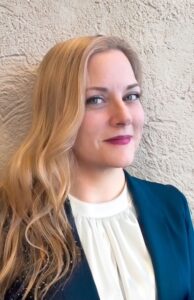
Statement:
I am excited to be considered for the Member-at-Large position for the Division 56 Executive Board. I'm particularly passionate about focusing on roles that go beyond individual practice and support organizations and public engagement. Serving on the Executive Board would allow me to extend my commitment to the field of trauma psychology through meaningful organizational support.
My previous experience as Member-at-Large on the board of the Jungian Society for Scholarly Studies and having served for the past six years on the Executive Committee and Board of Directors of the C.G. Jung Institute of Chicago demonstrates my ability to successfully execute this position. Through these experiences, I have developed a solid understanding of board operations, committee collaboration, strategic planning, and administrative responsibility.
Collaboration and communication are central to my approach. I value collegial decision-making and strive to communicate clearly, respectfully, and efficiently while maintaining alignment with organizational priorities. As the Member-at-Large involved with the Finance Committee, I would bring a careful and responsible approach to fiscal oversight. In my role as a program director, I have created and managed annual budgets. I have also aided in the development of DEI scholarships and tuition assistance programs.
Fundamentally, I am committed to collaborative leadership that can hold the complexity of our times while advancing trauma psychology’s impact in research, clinical practice, and public engagement. I would be honored to serve the Division in this capacity.
What are some priorities you would pursue to further promote anti-racism, diversity, equity, and inclusion within our division and our field?
"I hold a strong commitment to anti-racism, diversity, equity, and inclusion, and I am privileged to have had incredible mentors and colleagues in my development personally and professionally. In my role as Member-at-Large, I would aim to continue collaborative discussions with my fellow board members about how to best support continued integration of the I-DARE Task Force’s strategic plan. Particularly important to me is the inclusion and amplification of voices and perspectives that have been marginalized or silenced historically and those that are still not being given full voice and integration. Identifying and addressing power dynamics within organizations is an ongoing priority, particularly as someone whose own visible identities hold a lot of privilege. I am interested in continuing the work of recognizing who is being left out of important conversations and spaces, why that is continuing to happen, and what specific actions are needed to address it. I consider this work to be important at all levels: organizational, individual practice, research and education, and community outreach and public policy."
Given the current socio-political landscape, what do you see as the key challenges in promoting anti-racism, diversity, equity, and inclusion in our field and what are some ideas for how the division can tackle these challenges?
"In my roles on different committees for psychological organizations, I have found that the current environment has understandably raised concerns and fears around engaging in anti-racist and DEI work and the possibility of threats and retaliation, as well as concerns around financial retribution and impact to the future of organizations. These are real concerns and challenges of our time, but we cannot let those concerns stop us from continuing the work. I believe it is imperative to confront the present moment with honesty, openness, and integrity- including our commitment to promoting anti-racism, diversity, equity, and inclusion.
I have been disheartened at times by the lack of responsiveness of many organizations in not communicating support for continuing these efforts or for our communities being currently impacted. The silence around ongoing trauma inflicted on many of our communities can be terribly wounding. I would aim to work with the leadership team to understand how we can provide better transparency and communication in voicing our response to the current moment and in sharing our goals moving forward during these challenging times so that our division members, the communities we are part of, and the communities we serve can readily see our commitment in action. I would actively seek input across our community members about their experiences and perceptions of support and I would work to have spaces for collaborative conversations about what actions might be helpful in moving forward both in terms of our strategic planning in anti-racism and DEI initiatives but also in building our sense of community support inside and outside the Division."
What are some skills and interests that you bring that might align with the I-DARE strategic plan and goals?
"I have focused on the impact and experience of collective trauma in my research, workshops, and lectures, and also with my individual clients, particularly as it relates to the sociopolitical environment. This includes exploring the different impacts of collective trauma in relation to various identities and how to consider both the collective impact across identities and communities and the individual experience. This focus on considering how identity and trauma intersect translates well to supporting the I-DARE strategic plan and goals on both individual and collective levels. I also have experience and interest in public policy research, DEI scholarship and financial assistance program development, and community opinion research."

Statement:
I am deeply committed to advancing trauma-informed, equity-centered psychology through thoughtful leadership, collaboration, and responsible stewardship of resources. This role is an opportunity to support the Division’s strategic priorities while strengthening the connection between research, practice, policy, and the lived experiences of communities most impacted by trauma. I bring strong organizational and leadership skills developed through my work as a practice owner, consultant, and program developer. I regularly manage complex projects and balance clinical, administrative, and financial responsibilities. My leadership style is collaborative, transparent, and values-driven, with an emphasis on accountability and follow-through. Communication is one of my core strengths. I have developed and strengthened skills required to engage diverse audiences by communicating clearly, thoughtfully, and with cultural responsiveness. I am particularly effective at bridging conversations between academic and applied spaces and ensuring that policy and organizational decisions are accessible, ethical, and grounded in the needs of the communities most likely to be impacted. I also bring experience in program development and use policy to inform my decision-making, particularly as it relates to trauma-responsive systems, ethical practice, and sustainability. This position aligns with my experience evaluating resources and making strategic decisions that support long-term organizational health. My broader vision for the field of trauma psychology centers on expanding access, centering culturally responsive frameworks, and supporting clinicians and systems in moving beyond survival-based models of care. I am especially interested in advancing conversations about ethical accessibility, clinician sustainability, and the integration of trauma-informed principles across policy, education, and organizational leadership.
What are some priorities you would pursue to further promote anti-racism, diversity, equity, and inclusion within our division and our field?
"One priority I would pursue is expanding conversations within our division about equitable access to psychological assessment and diagnosis. Too often, testing practices and the tools we rely on have not been developed or normed with diverse populations in mind, which can contribute to misdiagnosis, underdiagnosis, or delayed diagnosis for individuals from marginalized communities. I believe our field must continue critically examining how assessment practices, training, and interpretation of data can perpetuate inequities and work toward developing more culturally responsive approaches to testing and diagnosis.
I would also prioritize strengthening pathways that increase representation and retention of psychologists from historically marginalized communities. This includes mentorship, leadership development, and intentional sponsorship opportunities that support students, trainees, and early-career psychologists who may not see themselves reflected in leadership roles within the field. Representation matters not only for our profession, but also for the communities we serve.
Finally, I believe our division has an opportunity to translate our commitments to anti-racism, diversity, equity, and inclusion into tangible action. This includes supporting programming, scholarship, and collaborative initiatives that address the ways racism, trauma, and structural inequities shape mental health outcomes. By fostering dialogue, encouraging accountability, and promoting culturally responsive research and practice, we can help move psychology toward a more equitable and inclusive future."
Given the current socio-political landscape, what do you see as the key challenges in promoting anti-racism, diversity, equity, and inclusion in our field and what are some ideas for how the division can tackle these challenges?
"In the current socio-political climate, one of the key challenges in advancing anti-racism, diversity, equity, and inclusion is navigating increasing polarization and resistance to conversations about structural inequities. Efforts that center equity and anti-racism are sometimes misunderstood as political rather than as essential components of ethical psychological science and practice. This can create hesitancy within institutions and professional spaces to engage in difficult but necessary conversations about bias, historical harms, and disparities in access to care.
Another challenge lies in ensuring that our field continues to critically examine how long-standing practices, including research design, training models, and psychological assessment, may unintentionally perpetuate inequities. For example, many psychological tests and diagnostic frameworks were developed using samples that did not fully reflect the diversity of the populations we now serve. Without ongoing reflection and innovation, these gaps can contribute to misdiagnosis, delayed diagnosis, or barriers to care for individuals from marginalized communities.
To address these challenges, I believe the division can play an important role by fostering spaces for dialogue, supporting scholarship that examines inequities in psychological science and practice, and promoting training that helps psychologists develop culturally responsive approaches to care. This includes encouraging research that expands normative data for diverse populations, supporting mentorship and leadership pathways for psychologists from historically marginalized communities, and ensuring that conversations about equity remain grounded in our shared commitment to improving mental health outcomes for all communities. By maintaining both curiosity and accountability, our field can continue moving toward practices that are more inclusive, ethical, and responsive to the realities of the populations we serve."
What are some skills and interests that you bring that might align with the I-DARE strategic plan and goals?
"I bring a combination of clinical expertise, assessment experience, teaching, and community-engaged work that aligns closely with the goals of the I-DARE strategic plan. As a licensed psychologist, much of my work focuses on trauma, diagnostic assessment, and improving access to culturally responsive mental health services. This work has strengthened my interest in examining how our field can continue evolving to ensure that research, training, and psychological assessment practices reflect the diversity of the populations we serve.
I also bring experience translating psychological knowledge into practical tools and conversations that clinicians, trainees, and communities can engage with. Through workshops, consultation, and the development of therapeutic resources, I have focused on creating spaces where psychologists can critically reflect on practice while also building skills that support more equitable and responsive care. I believe this aligns with the division’s commitment to advancing anti-racism, diversity, equity, and inclusion through education, dialogue, and professional development.
Finally, I am deeply interested in collaboration and mentorship within our field. I see an opportunity for the division to continue strengthening pathways that support psychologists across career stages while also fostering interdisciplinary dialogue about equity and social justice in psychology. I would hope to contribute by helping the division connect scholarship, clinical practice, and community engagement in ways that move our shared commitments from conversation into meaningful and sustainable action."
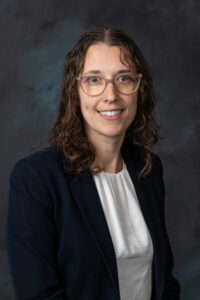
Statement:
I became passionate about trauma psychology after joining the Army as an active duty psychologist for my doctoral internship. In the military, as well as in my later work in the VA, I had the opportunity to be trained in several evidence-based trauma treatment practices and found trauma work to be especially meaningful. After leaving the VA/DoD system to become a full-time professor, I was asked to lead therapy groups for the Ukrainian refugees who had recently moved to my area. At the same time, I found very little information on how to best serve this population, and, after reaching out to several colleagues, I learned that many clinicians have little to no training in refugee mental health. This experience led to my current research interest in trauma, guilt, and refugee/immigrant populations. I'm thankful to the APA for providing me with a 2023 Early Career Global Psychology grant to start this research and want to give back to the community that has supported me. I'm interested in serving as a Division 56 member-at-large as a way to collaborate with psychologists to advance our level of knowledge about trauma and mental health in underserved populations, such as women, refugees/immigrants, and those of low socioeconomic status. As such, I'm especially interested in supporting related projects, such as the APA Refugee Mental Health Resource Network.
What are some priorities you would pursue to further promote anti-racism, diversity, equity, and inclusion within our division and our field?
"I would like to continue support for trainings and research related to anti-racism and DEI topics. I believe it is important to increase member engagement in such trainings to help members feel empowered and encouraged to work toward systemic change together. Additionally, hosting online discussions on related topics and concerns could be a way to build community and be a safe space for important conversations to occur."
Given the current socio-political landscape, what do you see as the key challenges in promoting anti-racism, diversity, equity, and inclusion in our field and what are some ideas for how the division can tackle these challenges?
"One current challenge is the lack of federal funding for research related to anti-racism and diversity. I believe it is important for our division to expand support for research projects related to anti-racism and DEI, especially those related to trauma measurement, trauma-related symptoms, and trauma interventions. A second challenge is training up the next generation of trauma psychologists. Due to cuts in federal student loans for graduate students and concerns regarding federal grants for undergraduate students, the education needed to become a psychologist may be out of reach for many underprivileged students. Targeted scholarships for graduate and/or undergraduate students in psychology may help such students work toward their goal of becoming a trauma psychologist while increasing the diversity of practitioners in our field."
What are some skills and interests that you bring that might align with the I-DARE strategic plan and goals?
"As noted above, my current research is focused on trauma in refugee and immigrant populations. I am interested in better understanding factors related to mental health outcomes following potentially traumatic experiences in these underserved populations in order to implement interventions most likely to be of benefit. Additionally, as an undergraduate professor, I frequently consider ways in which to create and teach curriculum which challenges psychology students to reflect on how they might advocate for marginalized and underserved populations in their own current or future work."

Statement:
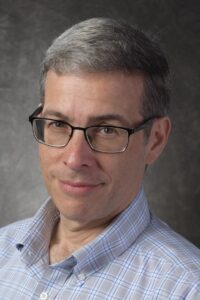
It is my pleasure to apply for the Division 56 Member-at-Large position. I would be honored to contribute to the board, including strategic and organizational planning.
I obtained my Ph.D. in Clinical Psychology at the University of Nebraska-Lincoln under the mentorship of Dr. Debra Hope. I completed internship at the Boston Consortium in Clinical Psychology, where my major rotation was within the National Center for PTSD Behavioral Science Division. I completed a three-year postdoctoral fellow at the National Center for PTSD Dissemination and Training Division, part of the VA Palo Alto Health Care System and Stanford University School of Medicine, working primarily with Dr. Maylene Cloitre.
Currently, I am a Clinical Assistant Professor at the NYU Grossman School of Medicine and an Attending Psychologist at NYU Langone Health, where I provide individual, group, and couples therapy as well as supervise psychology postdoctoral fellows and psychiatry residents. I am also an Adjunct Assistant Professor at Columbia University, teaching courses on CBT and outcomes monitoring for student working on their M.S.W. degrees.
Since I was an intern, I have been actively involved in research, service delivery, teaching/training, and consultation related to assessment and treatment of trauma-related difficulties. I have particular expertise in skills training in affective and interpersonal regulation (STAIR), including having been actively involved in developing a mobile app and web-based intervention corresponding to the treatment. It would be an honor to contribute to the Division.
Statement:
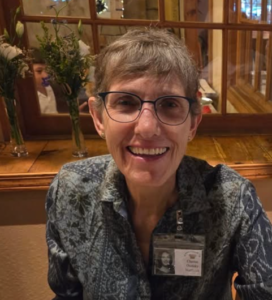
I’m honored to be nominated for MAL. My commitment to serving is personal and professional. I bring a positive perspective to leadership. My vision includes increased efforts to bring psychology to underserved/poorly-served populations. I build teams and coherent inter-and-multidisciplinary approaches/collaborations to trauma/resilience. I support research on emerging/promising practices (psychedelics/art/music/dance), advocating for optimal implementation/policies. I bring lived experience, enthusiasm, and abiding interest to the division’s mission.
APA-leadership experience: President; Past-President; Divisional Program Chair; Newsletter Editor; Fellows Chair; Council Representative. I have a sound understanding of all aspects of APA divisions.
I’m committed to interdisciplinary research/practice. I’m a licensed social worker and massage therapist, positioned to build cross-disciplinary connections to serve our mission. Beyond APA, I served as elected board member (NCBTMB/National Certification Board for Therapeutic Massage & Bodywork).
Recognitions include: ICP’s Mullen-Award for Distinguished Contributions to International Psychology, and Society for Global Psychology President’s Award for Extraordinary Service. I bring research/financial acumen: in nearly a decade in Alaska State government, I served as lead grant writer of over $22 million in SAMHSA grants for SUD/SMI/Suicide Prevention, including budget analysis/writing, and reporting/evaluation for federal SAMHSA, HRSA, and CMS/Medicaid.
My trauma-work spans teaching/research/service. Teaching: Alaska/Cambodia/India, and online. Graduate courses: Refugee Trauma/Resiliency; Trauma: Mind/Body/Spirituality; Disaster/Crisis/Trauma; cultural/international/clinical/abnormal psychology. Service: Medical missions to Middle-East/Haiti/Central & South America/Asia. Editorial-board: APA’s Traumatology journal. Meaningfulworld’s (Association for Trauma-Outreach & Prevention/ATOP) Advisory Board. Research: 12 books; 150+ articles/chapters, many trauma/resilience-focused (book Human Strengths and resilience). Coauthored chapters/articles on: hate crimes towards immigrants/migrants; gender-based-violence in Vietnam; trauma-focused massage therapy for refugees/immigrants.
Statement:
As a clinical psychologist for 38 years, my clinical work has focused on vulnerable children and families. My work began at the University of California, Davis’ community hospital where I was the director of the pediatric liaison service and provided services to the children and families on the hospital’s pediatric wards, training to medical students, pediatric and psychiatry residents, and pre- and post-doctoral and masters interns and fellows. After leaving the University, I entered an administrative role at a children’s hospital where I was the Director of Mental Health Services. There, I was able to develop programs for vulnerable children and families alongside Alameda, County, CA. When I left the hospital, I worked for 10 years at a non-profit where we specialized in providing services to vulnerable children and families who were involved with Child Protection Agencies in the San Francisco/Oakland/Solano Areas. I oversaw the programs, mentored and supervised clinicians and developed training programs for the community. The population we served drew me to the work of Bruce Perry, MD PhD and Stephen Porges, PhD. I studied with Dr Perry for many years and became a trainer and mentor in the Neurosequential Model. I was able to provide yearlong and series of trainings to interns and clinicians in the community.
I retired from full-time work, but continued to provide training on a variety of topics on early childhood mental health and trauma - children and families. I was encouraged to apply for a Fulbright Scholar Award and was selected for this honor for the academic year of 2024-2025. I traveled to Warsaw, Poland where I taught undergraduate and graduate students’ semester long classes and provided brief workshops at SWPS University and to the community (many times through a translator). The courses were on my two passions, early child mental health and children and trauma. I will be returning to Warsaw, Poland for two months this Spring as a Fulbright Specialist to develop a curriculum on Children and Trauma that the SWPS faculty can integrate into their curriculum. I will also be teaching graduate and undergraduate students for a semester long class on children and trauma. SWPS University in Warsaw, Poland provides classes in Polish and English. Their English Program undergraduate and graduate programs attract students from around the world. These experiences have led me to dig deeper into cultural and international issues regarding children-families and trauma.
I am very interested in three Division 56’s committees: International, Education and Training and Oversees. I have dedicated my career to teaching, mentoring and supervising clinical psychology trainees, interns and professionals. After spending a year teaching in Poland, my interest in culture implications has increased. Trauma is viewed quite differently in different countries and through different cultural lens. I had the honor of working with Ukrainian high school students for the year I spent in Warsaw and this experience was quite moving. The capacity of these young people to thrive after experiencing atrocities first hand and then being driven from their homes was quite eye opening. The people of Poland have a long history of trauma and to see first-hand how it permeates their culture and daily life was quite interesting. It is one thing to read about it, but to see it was quite enlightening. In addition, I realized that the curriculum in many European Countries as well as requirements for practice are quite varied. This is was has increased my interest in the Division 56’s committees listed above.
What are some priorities you would pursue to further promote anti-racism, diversity, equity, and inclusion within our division and field?
As with early child mental health, the younger you recognize issues and address them, the more likely you are to be successful. I would like to pursue these issues by giving mental health clinicians the tools they need to recognize their own biases, how their biases are brought into their work and to recognize issues with young clinicians, students of psychology, child care workers and teachers. Children live in the context of their environment. In order address these issues, we need to scaffold communities, families, the educational system a to recognize and tackle the perpetuation of the issues. Equipping mental health providers with tools that they can utilize in all their different types of work (teaching, therapy, research, etc.) will assist them in understanding how they perpetuate and then can work within their chosen specialty to address the issues. My interest and expertise is in training and mentoring young clinicians and undergraduate and graduate education, I would like to focus on this group. I am also very interested in this issue from an international perspective as I am currently teaching Poland with a diverse group of graduate and undergraduate students.
Given the current socio-political landscape, what do you see as the key challenges in promoting anti-racism, diversity, equity, and inclusion in our field and what are some ideas for how the division can tackle these challenges?
"From an international perspective this is tricky. My experience so far has been that individuals have been able to separate people from politics. These are not new issues, but the daily rhetoric has become more toxic. We are barraged daily with messages of hate and fear, which can and is leaking into our culture and thinking. I think one of the major challenges is around fear. Fear of standing up to the current rhetoric, fear of the consequences if institutions push back. Without inclusion into the message or willingness to combat it, we will continue to be splintered."
What are some skills and interests that you bring that might align with the I-DARE strategic plan and goals?
"I am a white privileged, well educated individual who has been on a journey of self reflection as I attempt to hold a cultural humility stance.
A skill that I bring, is an understanding of this journey and a realization that I can know the facts, hear how it affects you, but not truly understand as I walk in different shoes....my life journey as a child has been in a different context
For my entire 35+ year career I have worked with vulnerable individuals (children and families) who have taught me a lot about a lack of inclusion. I also spent 11 months in Poland last academic year. My students came from many countries. They pushed my biases and my need to continue to be a learner as we examined literature around early childhood mental health and children and families and trauma. I will bring this experience into my work with Division 56."