
Cascading Climate Hazards and Environmental Justice
In Communities on the Fenceline of Polluting Industries
Alique Berberian, MPH, MIA
Section Editor: Claire J. Starrs
Climate change, driven largely by human activities like fossil fuel use and greenhouse gas emissions, is having widespread and unprecedented impacts on physical environments and populations in many regions across the world (IPCC, 2023). The historical and ongoing contributions to climate change, as well as its associated impacts, have been unequal. Communities that have historically contributed the least to this global threat are disproportionately affected by present-day impacts and are most vulnerable to future ones (Chapman & Ahmed, 2021).
It is well documented in the United States that marginalized populations like communities of color and low-income communities are experiencing greater impacts associated with climate change, including extreme weather, flooding, hurricanes, infectious diseases, and disruptions in food production (Berberian et al., 2022; Chakraborty et al., 2019; Gutierrez & LePrevost, 2016). Findings demonstrate that climate change impacts have the potential to amplify existing social and economic inequalities, and to exacerbate current health disparities (Shonkoff et al., 2011). As such, it is important to prioritize the communities most vulnerable to climate change that have the least resources to prevent, mitigate, and recover from impacts.
Within the context of climate change, vulnerability is framed as the sensitivity and susceptibility of systems and individuals to a climate hazard (e.g., extreme heat, flooding) and the related capacity to adapt or cope with the exposure (Ebi et al., 2006). Place of residence may influence both the susceptibility to a hazard and likelihood of exposure. For example, studies have found that in the United States, economically disadvantaged populations and communities of color are overrepresented in inland flood zones (Chakraborty et al., 2014; Qiang, 2019) and disproportionately live in areas with high heat island intensity (Hsu et al., 2021). Social and economic factors like housing conditions and healthcare access can affect households’ ability to prevent or recover from exposure to a hazard. At the community or institutional level, the availability of material resources and public health infrastructure may influence whether early warning systems for extreme weather events (e.g., hurricanes, heatwaves) can be established to allow for timely evacuation or protection.
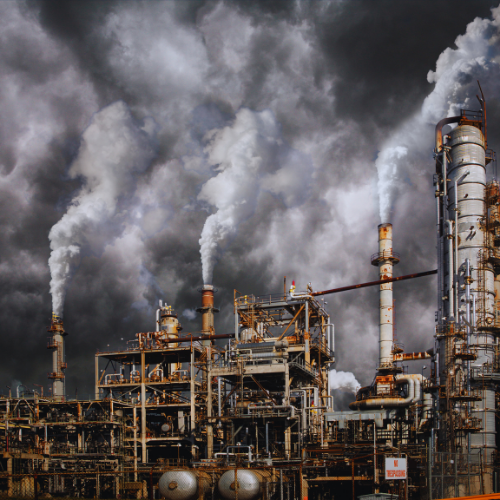
Fenceline communities, defined as those living adjacent to polluting industries like power plants or sewage treatment facilities, are especially vulnerable to the individual and co-occurring exposures of climate hazards and hazardous pollutants. Residential proximity to industrial sites has been linked to higher risk for exposure to hazardous pollutants and related adverse health outcomes (Johnston & Cushing, 2020). Due to their proximity to industry, fenceline communities are also at increased risk of climate change-induced natural technological disasters, known as natechs, in which natural hazards (e.g., flooding, wildfires) trigger technological malfunctions or accidents during which contaminants from hazardous sites are unintentionally released into local air, land or water. Given that communities of color and low-income households are more likely to live near polluting sites (Mohai et al., 2009), cascading impacts from climate change are likely to disproportionately impact these communities.
FENCELINE COMMUNITIES AND ENVIRONMENTAL JUSTICE
Polluting industries are disproportionately located in low-income communities and communities of color. The debate on which came first, the polluters or the people, and the relevance of this question, has been discussed in the environmental justice literature, a field of study that investigates the unequal distribution of environmental burdens and benefits. Research examining the temporal patterns of industrial facility siting suggests that polluting industries are more often sited in existing low-income communities with higher proportions of people of color, with less evidence in support of the “minority move-in” hypothesis (Pastor et al., 2001; Saha & Mohai, 2005). The discriminatory siting of facilities in neighborhoods with less power and political capital (i.e., a path of least resistance) as well as forms of structural racism, including residential segregation, have contributed to present day patterns of environmental hazard locations and have documented implications for the health and well-being of marginalized communities today (Morello-Frosch & Lopez, 2006).
An example of discrimination in the housing market that has contributed to residential segregation and neighborhood disinvestment is the practice of redlining. Following the Great Depression, the Home Owners' Loan Corporation, established in 1933 by the federal government to stabilize the housing market, created color-coded neighborhood maps, ranking mortgage lending risk from “A” (best) to “D” (hazardous or redlined). Risk rankings were often based on racist measures, including explicit consideration of the racial/ethnic makeup of neighborhoods. Studies have found that, in the present day, previously redlined neighborhoods are more likely to have poorer air quality (Lane et al., 2022), a disproportionate number of oil and gas wells (Gonzalez et al., 2023) and power plants (Cushing et al. 2023), and worse environmental and health outcomes (Swope et al., 2022), increasing residents’ vulnerability to impacts from climate change related hazards.
IMPACTS FROM FLOODING AND WILDFIRES ON SOCIALLY VULNERABLE COMMUNITIES
Climate change-related flooding and wildfires are increasingly posing significant health, environmental, and socioeconomic risks to communities across many regions of the US. Both are examples of climate hazards with the potential for triggering natechs.
Flooding
More frequent extreme precipitation and hurricane events, as well as rising sea levels, are increasing the risk of coastal and inland flooding in parts of the U.S. (Bhatia et al., 2019; Jong et al., 2023; Kossin et al., 2020; Sweet et al., 2022; Vitousek et al. 2017). It has been estimated that currently, almost 41 million people in the U.S. are exposed to a 1-in-100-year pluvial (rainfall-driven) or fluvial (riverine) flood (i.e., have a 1% annual chance of experiencing a flood), with future exposure risk expected to increase (Wing et al., 2018). National flood risk assessments indicate that socially vulnerable and economically disadvantaged populations are more likely to live in flood zones (Qiang, 2019; Tate et al., 2021), and local studies have documented disproportionate flooding, displacement, and adverse health effects among low-income households and people of color in the aftermath of Hurricanes Katrina (Hartman & Squires, 2006; Fussell et al., 2010; Lenane et al., 2019), Sandy (Lieberman-Cribbin, Gillezeau, et al., 2021) and Harvey (Chakraborty et al., 2019; Collins et al., 2019).
Wildfires
Climate change contributes to wildfires through hotter, drier weather and drought (Romero-Lankao et al., 2014; Mazdiyasni & AghaKouchak, 2015). Wildfire smoke exposure is a major health risk and disproportionately impacts sensitive groups. Epidemiological studies in the U.S. have found that racial minority groups are at increased risk for wildfire-related respiratory and cardiovascular illnesses (Liu et al., 2017; Hahn et al., 2021; Sorensen et al., 2021). Inequalities related to housing quality, access to air filtration, and occupational conditions (i.e., outdoor work) contribute to greater vulnerability to wildfire smoke exposure among low-income communities and communities of color. Furthermore, wildfires in the U.S. are increasingly impacting communities living in the wildland-urban interface and are no longer confined to rural or wildland areas alone (Kumar et al., 2025). Factors like rising costs of urban housing in many U.S. cities have led communities to relocate into suburban neighborhoods in areas at higher wildfire risk. These sociodemographic shifts are contributing to diverse populations being increasingly impacted by wildfires (Yadav et al., 2023).
CLIMATE CHANGE-RELATED NATECHS AND THEIR IMPACTS ON FENCELINE COMMUNITIES
A widely known example of a natech disaster is the Daiichi power station nuclear accident in Fukushima, triggered by the 2011 Great East Japan Earthquake and consequent tsunami, during which extreme flooding disabled the power supply and cooling system of three reactors resulting in the release of radioactive material. Natechs can also occur on smaller scales and can be the result of a variety of natural hazards. In recent years, hydrometeorological natech events have gained increasing attention, marking a shift in natech research which has traditionally focused on geological hazards, such as earthquakes. This is a testament to the increasing threat of impacts from climate change-related extreme weather, flooding, and wildfires and the risks they pose to industrial sites like chemical plants and refineries that manufacture, use, or store hazardous materials (Picou, 2009; Ruckart et al., 2008).
Flood-induced Natechs
Flooding, strong winds, and storm surges can damage infrastructure, cause power failures and equipment malfunctions, and prevent personnel access to industrial sites, which may lead to natech events resulting in contaminant exposures. For example, oil spills from flooded storage tanks have the potential to contaminate water sources and air emissions from chemical plant malfunctions can cause acute changes to ambient air quality and increase risk for adverse health effects. Hurricane Harvey, which made landfall in August 2017 in the Texas Gulf Coast region, resulted in extreme rainfall and catastrophic flooding, leading to many natech events of varying severity (Misuri et al., 2019; Qin et al., 2020). Reports documented more than 14 million pounds of air emissions, including benzene (a known carcinogen), released from industrial sites in the Houston, Beaumont, and Corpus Christi areas due to equipment malfunctions, power failures, and planned shutdowns in advance of the hurricane (TCEQ, 2022). Research has shown sociodemographic disparities in the likelihood of contaminant releases during Gulf Coast hurricanes like Harvey, Rita and Ike, including disproportionate contaminant releases reported in neighborhoods with higher proportions of Hispanic residents and lower socioeconomic status (Berberian et al., 2024; Flores et al., 2021; Lieberman-Cribbin, Liu, et al., 2021), suggesting an increased risk of pollutant exposures among communities with existing social vulnerabilities.
Wildfire-induced Natechs
Although less well documented, wildfires can also have cascading impacts on the environment and human health, including impacts on drinking water and air quality, particularly from wildfires in the wildland-urban interface. In addition to the direct contamination of drinking water sources from sediment and ash pollution, wildfires can also trigger secondary or indirect infrastructure-related contamination. For example, following the Tubbs (2017) and Camp (2018) Fires in Northern California, benzene and other volatile organic compounds were found in the water distribution network at levels above federal and state limits (Proctor et al., 2020). It was hypothesized that heat damaged (i.e., burned or exposed to veryhigh temperatures) plastic pipes caused contaminants to leach into water sources. Another study found that from 1984-2019, more than 100,000 oil and gas wells were located in areas burned by wildfires in the Western US, and almost 350,000 people resided within 1 km of them (González et al., 2024). The study also found that the number of wells in wildfire-risk areas is projected to more than double by the end of the century and that communities of color are disproportionately exposed to wells threatened by wildfires.
These findings indicate that cascading impacts from wildfires in oil and gas fields, like explosions, releases of hazardous pollutants into air, land and water, and damages to critical energy infrastructure, will continue to increase and pose risks to nearby communities as new wells are sited and populations move closer to the wildland-urban interface. Coastal flooding due to sea level rise is projected to increase in the face of climate change and poses natech risks to communities residing near industries located in flood prone areas. An assessment of more than 10,000 hazardous facilities in coastal counties in California found that more than 400 are at risk of a 1-in-100-year flood due to sea level rise by 2100 if greenhouse gas emissions continue business-as-usual (Cushing et al., 2023). Oil infrastructure, including fossil fuel ports and terminals, petroleum refineries, and oil and gas wells, comprise a large proportion of sites at risk. The study found that socially marginalized populations have a higher likelihood of living within 1km of a facility that is at risk of future flooding due to sea level rise.
A CRITICAL NEED TO PROTECT UNIQUELY VULNERABLE COMMUNITIES
Residential proximity to polluting industries, together with threats from climate changerelated hazards, pose unique risks to fenceline communities. Health risks posed by releases of toxic substances during natechs can contribute to “cumulative impacts,” or the combined adverse health effects from exposure to multiple environmental (e.g., chemical agents) and social stressors (e.g., socioeconomic factors, chronic discrimination) (McHale et al., 2018). In combination, the cumulative impacts of contaminant and non-contaminant stressors can result in amplified adverse health and mental health outcomes for already socially vulnerable communities (Huang et al., 2018).
The unique health risks and disproportionate impacts associated with climate-induced natechs on socially vulnerable communities suggest that environmental justice must be prioritized in climate adaptation, resilience planning, and disaster preparedness. Projections of future wildfire and flood risk should inform decision-making related to the retirement and siting of new hazardous sites and should also be used to identify specific hazardous sites requiring additional safeguards to prevent contaminant releases (e.g., legacy cleanup sites). As the impacts of climate change accelerate, it will be increasingly important to implement equitable and proactive strategies to protect the health and well-being of fenceline communities, especially in areas that have already experienced impacts from climate hazards and are at the highest risk for future ones.

Alique Berberian is a PhD student in the Environmental Health Sciences Department at the University of California, Los Angeles. She uses geospatial, statistical, and epidemiological methods in her doctoral work to study the environmental justice implications and health effects associated with human exposure to environmental and climate change related hazards. She has published work examining contaminant releases from hazardous facilities during major hurricanes on the Texas Gulf Coast and on drinking water threats from oil and gas wells in Los Angeles, CA. She holds master’s degrees in public health and international affairs from Columbia University.
Citation: Berberian, A. (2025). Cascading climate hazards and environmental justice in communities on the fenceline of polluting industries. Trauma Psychology News, 20(2), 20-25. https://traumapsychnews.com